Each-Way Betting Explained: Place Terms and Calculations
Best Horse Racing Betting Sites – Bet on Horse Racing in 2026
 Available in US
Table of Contents
- Each-Way Is Two Bets, Not One — and That Changes Everything
- How Each-Way Bets Work: Win Part, Place Part and Standard Terms
- Recommended online casinos
- Place Terms by Field Size and Race Type: The Full Breakdown
- Calculating Each-Way Returns: Step-by-Step with Real Numbers
- Finding Each-Way Value: When the Place Odds Overpay
- The Big-Field Each-Way Strategy: Exploiting Handicaps and Large Grids
- Rule 4 Deductions and Non-Runners: Protecting Your Each-Way Bet
- Each-Way Pitfalls: Short-Price Favourites and False Value
- Frequently Asked Questions
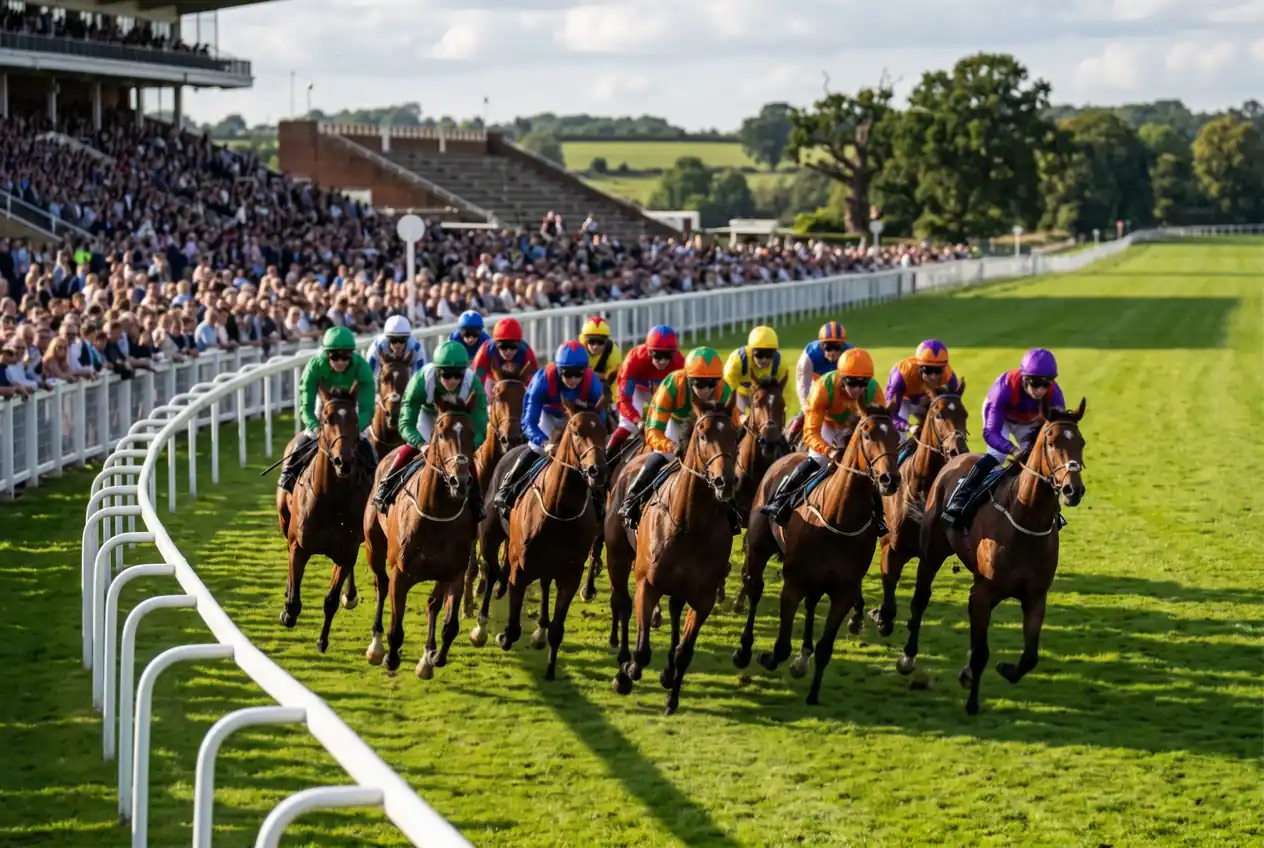
Each-Way Is Two Bets, Not One — and That Changes Everything
I backed a 14/1 shot each-way in a big-field handicap at Newbury a few years ago. The horse ran a blinder, led turning in, got caught in the last fifty yards, and finished second. My win bet lost. My place bet paid 14/1 divided by four — that is 7/2 for the place part. On a ten-pound each-way stake (twenty pounds total outlay), the place return was £45. Net profit: £25. If I had bet twenty pounds to win only, I would have lost the lot. That single race taught me more about each-way betting than any article I had read.
Each-way betting accounts for roughly 22% of all horse racing wagers in the UK, making it the second most popular bet type after straight win bets at 36%. That proportion makes sense. Each-way is a natural hedge — you get two chances to collect from one selection. But it is also a bet that many punters use carelessly, backing every horse each-way without thinking about when the structure actually works in their favour and when it quietly bleeds money. The mechanics matter, and the place terms matter even more.
This guide strips each-way betting down to its components: what you are actually paying for, how the returns are calculated, where the genuine value lies, and where the trap doors hide. I have been placing each-way bets almost daily for nine years, and the line between profitable and unprofitable use comes down to understanding the maths behind the place part of the bet — not just the excitement of having a horse that might win.
How Each-Way Bets Work: Win Part, Place Part and Standard Terms
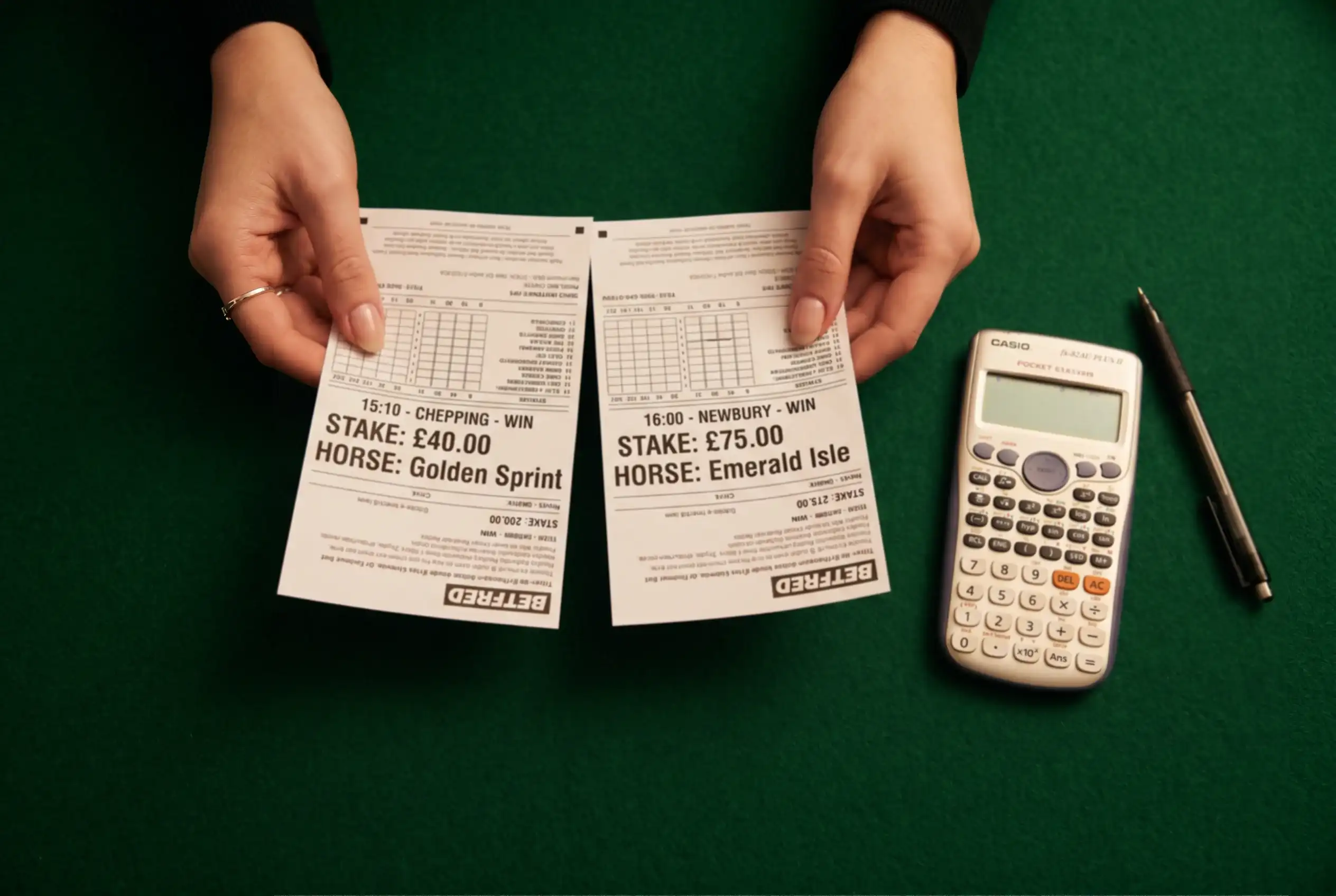
When you place a ten-pound each-way bet, you are placing two separate ten-pound bets: one on the horse to win, one on the horse to place. Your total stake is twenty pounds. If the horse wins, both bets pay out — the win part at the full odds and the place part at a fraction of the odds. If the horse places but does not win, only the place part pays out. If the horse finishes outside the places, both bets lose.
The place part is paid at a fraction of the win odds, and that fraction is determined by the place terms. Standard UK place terms are 1/4 of the odds for most races and 1/5 of the odds for specific large-field races. So if your horse is 10/1 and the place terms are 1/4 odds, the place part pays 10/4 — that is 5/2. At a ten-pound place stake, the return is £35 (£25 profit plus £10 stake). If the terms are 1/5, the place part pays 10/5 — that is 2/1, returning £30 on a ten-pound stake.
The number of places paid depends on the field size. In a race with five to seven runners, bookmakers typically pay two places. With eight or more runners, three places are paid. In handicap races with sixteen or more runners, most bookmakers pay four places, and some extend to five or even six on selected high-profile races like the Grand National. These extended place terms are promotional offers and can shift the value equation significantly.
A crucial point that trips up newcomers: if a race has four runners or fewer, the each-way option disappears. With only four horses, the “place” portion would cover too much of the field to be commercially viable for the bookmaker. Five runners is the minimum for each-way betting, and at that level only two places are paid at 1/4 odds — the tightest possible terms.
Recommended online casinos
- BeOnBetBonus: 100% up to €500 + 100 FS · Payout speed: 1-3 business days
- Revery PlayBonus: 100% up to€1,000+ 100 FS · Payout speed: 1-3 business days
- ChanzeBonus: Slots Welcome Bonus #1 200% up to €500 · Payout speed: 1-3 business days
- JetsetspinsBonus: 200% Bonus + 100 Free Spins + Free Royal Wheel · Payout speed: 1-3 business days
- DieselwinBonus: Welcome Pack 250% up to £4000 + 200 FS · Payout speed: 1-3 business days
- ZombillionBonus: Welcome Pack 250% up to £4000 + 200 FS · Payout speed: 1-3 business days
- WinBeastBonus: €5000 + 500 FS + €650 Freebet · Payout speed: 1-3 business days
- NightWinBonus: £900 + 400 free spins · Payout speed: 1-3 business days
- SpinFormulaBonus: 550% Up To £15,000 + 550 FS · Payout speed: 1-3 business days
Place Terms by Field Size and Race Type: The Full Breakdown
I keep a laminated card in my wallet with place terms written out. It sounds old-fashioned, but it saves me from making sloppy bets when I am at the track and the race is about to go off. The terms vary enough that assuming “it is probably 1/4 odds, three places” will cost you over time.
For non-handicap races with five to seven runners: two places, 1/4 odds. This is the tightest standard configuration. You need to finish first or second, and the place payout is modest. Each-way betting in these races is rarely attractive because covering only two places in a competitive field does not give you much of a safety net.
For non-handicap races with eight or more runners: three places, 1/5 odds. The extra place helps, but the odds fraction drops from a quarter to a fifth, reducing the place payout. This is where many punters get caught — they see three places and think the terms are generous, without noticing that 1/5 odds pays considerably less than 1/4.
For handicap races with sixteen or more runners: typically four places at 1/4 odds. This is the sweet spot for each-way betting. The field size means more runners finishing out of the places and the 1/4 odds fraction gives a meaningful return on the place part. Public favourites in fields of twelve or more win only about 27% of the time, which means the market leader fails nearly three times out of four. In these big fields, a well-chosen each-way selection at a decent price can collect on the place part regularly enough to compensate for the missed wins.
Promotional extra-place offers push the maths further in the punter’s favour. Some bookmakers pay five or six places on selected races, particularly the big festival handicaps at Cheltenham, Aintree, and Royal Ascot. When a bookmaker pays six places in a 20-runner handicap at 1/4 odds, you are effectively covering nearly a third of the field with the place part of your bet. That is an unusually generous deal, and serious each-way punters build their betting calendar around these opportunities.
Calculating Each-Way Returns: Step-by-Step with Real Numbers
Abstract maths is forgettable. Let me use real money to make this stick. Suppose you place a five-pound each-way bet on a horse at 12/1 in a sixteen-runner handicap. Place terms: 1/4 odds, four places. Your total outlay is ten pounds (five pounds win, five pounds place).
Scenario one: the horse wins. Your win bet pays 12/1 on a five-pound stake: that is £60 profit plus £5 stake returned = £65. Your place bet pays 12/4 = 3/1 on a five-pound stake: £15 profit plus £5 stake = £20. Total return: £85. Total profit: £85 minus £10 outlay = £75.
Scenario two: the horse finishes second, third, or fourth. Your win bet loses — that is £5 gone. Your place bet pays 3/1 on five pounds: £15 profit plus £5 stake = £20. Total return: £20. Total profit: £20 minus £10 outlay = £10. You have lost the win bet but made a net profit overall because the place part more than compensated.
Scenario three: the horse finishes fifth or worse. Both bets lose. You are down ten pounds.
Now consider the same bet at 4/1 instead of 12/1, everything else being equal. If the horse places but does not win, the place part pays 4/4 = 1/1 (evens) on five pounds: £5 profit plus £5 stake = £10. Against a total outlay of ten pounds, you break even. There is no net profit from a placed finish at 4/1 with 1/4 odds terms. This is the critical insight: each-way betting only generates place-only profit when the win odds are long enough for the fractional place payout to exceed your total stake.
The breakeven win price for standard 1/4 odds terms is 4/1. Below that price, a place-only finish loses money or breaks even after accounting for the dead win bet. At 1/5 odds terms, the breakeven is higher — roughly 5/1. Any horse you back each-way at odds shorter than these thresholds is a bet where only a win produces a profit. You are paying for the place insurance but not collecting enough when you need it. I use these breakeven points as a hard floor: I will not bet each-way at prices below them unless there are exceptional promotional place terms that change the maths.
Finding Each-Way Value: When the Place Odds Overpay
Most punters think about each-way value in terms of the win price. “It is 10/1, that is a decent price each-way.” That logic is incomplete. The real question is whether the place part of the bet represents value on its own — because in big-field handicaps, the place part is where the majority of returns come from.
Think of it this way. Odds-on favourites win 55–60% of their races on the Flat. That means they lose 40–45% of the time. In a competitive field, finishing in the places is significantly easier than winning. If a horse has a 15% chance of winning a sixteen-runner handicap, it might have a 40% chance of finishing in the first four. The win bet at 10/1 (implied probability 9.1%) might represent value if you think the true probability is 15%. But the place bet at 5/2 (implied probability 28.6%) might represent even greater value if the true place probability is 40%.
Horses priced at 1.25 or shorter win 86% of their races — but those races are typically small fields where each-way terms are poor. The value in each-way betting lives at the opposite end of the market: horses at 8/1 and above in large fields where the place terms are most generous and the price fractions produce meaningful returns.
I assess each-way value by mentally pricing the place bet separately. I ask: “Would I bet on this horse at 5/2 to finish in the first four of this race?” If the answer is yes, the each-way bet has a solid foundation regardless of whether the horse wins. If the answer is no — if I think 5/2 is too short for a place finish — then the each-way bet is being carried entirely by the win component, and I should consider a straight win bet instead.
This approach changes which horses you back each-way. It steers you towards consistent placers at medium prices rather than speculative longshots. A horse at 8/1 that places in roughly 40% of its races is a better each-way proposition than a horse at 25/1 that places in 15% of its races, even though the 25/1 shot offers a bigger win payout. The maths of the place part, compounded over dozens of bets, drives long-term profitability.
The Big-Field Each-Way Strategy: Exploiting Handicaps and Large Grids
Saturday afternoons at the major tracks — Newmarket, Ascot, York — regularly produce handicaps with twenty or more runners. These are the races where each-way betting comes alive, and where the HBLB’s observation that bookmakers’ gross profits in early 2025 ran above recent norms at the Cheltenham Festival tells only half the story. The other half is that informed each-way punters can thrive in exactly these conditions, because big-field handicap betting creates structural inefficiencies in the place market.
The inefficiency works like this. Bookmakers set their odds based primarily on win probabilities. The place terms are derived mechanically from the win odds — divide by four or five — rather than independently priced. But the relationship between a horse’s win probability and its place probability is not a fixed ratio. A front-running horse that leads for most of the race and gets caught late might have a 10% win chance but a 50% place chance, because its running style means it is almost always there or thereabouts. A closer that makes one late run has a different win-to-place ratio — it either gets there or does not, with fewer intermediate finishes.
Running style is the first filter for big-field each-way selections. Prominent racers and stalkers — horses that race near the front or in mid-division — tend to finish in the places more consistently than hold-up horses. Draw position is the second filter. At courses with a known draw bias, horses drawn on the favoured side have a place advantage independent of their ability. A horse drawn on the wrong side might have the form to win but a reduced chance of placing, because the track layout forces it to cover more ground or race in a disadvantaged position.
Consistency is the third filter. I look for horses that have finished in the first four or five in a high proportion of their recent starts, even if they have not been winning. A form string of 4-3-5-2-3 is unattractive to win-only bettors, but for each-way purposes it represents a horse that almost always runs its race and hits the frame. Pair that consistency with a price of 10/1 or above in a race paying four places at 1/4 odds, and you have the foundations of a positive-expectation each-way bet.
I target three or four big-field handicaps per week during the Flat season and two or three during the jumps. That focus keeps the volume manageable and the analysis deep enough to be meaningful. Trying to bet each-way in every race dilutes the edge — the strategy works in specific conditions, and respecting those conditions is part of the discipline.
Rule 4 Deductions and Non-Runners: Protecting Your Each-Way Bet
Nothing deflates a winning bet faster than discovering a Rule 4 deduction has eaten into your returns. Rule 4 applies when a horse is withdrawn from a race after the final declarations — typically on the day of the race — and its removal changes the market. If the withdrawn horse was well-fancied, the remaining runners become more likely to win, so the bookmaker adjusts all payouts downward to reflect the altered probabilities.
The deduction scale ranges from 5p in the pound (for a long-priced withdrawal) to 90p in the pound (for a very short-priced withdrawal). If the withdrawn horse was 2/1 and the deduction is 45p in the pound, a £100 payout becomes £55. That is a heavy hit. Rule 4 deductions apply to both the win and place parts of an each-way bet, so the impact on your total return is doubled compared to a straight win bet.
Non-runner policies vary between bookmakers and between bet types. If you take a fixed price and the horse becomes a non-runner, your stake is returned as a void bet in most circumstances. But if your bet is part of a multiple — a double, treble, or accumulator — the non-runner leg is typically treated as a winner at 1/1 (evens), and the rest of the bet stands. For each-way singles, a non-runner simply voids the bet.
The practical defence against Rule 4 is timing. If you bet on the day of the race — particularly close to the off — withdrawals have usually already been factored into the market. Morning prices carry more Rule 4 risk because there is more time for horses to be pulled out. If best odds guaranteed is available, it mitigates some of the risk by ensuring you get the better of your fixed price or SP, but it does not protect you from Rule 4 deductions, which apply regardless of which price settles your bet.
Each-Way Pitfalls: Short-Price Favourites and False Value
The most common each-way mistake I see — and one I made myself for longer than I care to admit — is backing short-priced horses each-way. A horse at 3/1 with 1/4 odds terms pays 3/4 for the place part. On a five-pound each-way stake, a place-only finish returns £8.75 against a total outlay of ten pounds. You lose £1.25 every time the horse places but does not win. Favourites win 30–35% of the time, which means even the best-fancied runners lose two-thirds of their races. If your 3/1 shot places 50% of the time and wins 30%, the maths on the each-way bet is worse than a straight win bet at the same price.
The second pitfall is treating each-way as a consolation strategy — “I do not really think it will win, but it might place.” If you do not rate a horse’s win chance, what exactly are you paying double the stake for? The win part of the bet is dead weight. You would be better off finding a way to bet on the place market directly — which is possible on exchanges — rather than paying for a win bet you do not believe in.
False value is the third trap. A horse drifts from 6/1 to 10/1, and suddenly it “looks good each-way.” But why did it drift? If the price lengthened because smart money is against it, the longer odds do not represent better value — they represent a more accurate assessment of a horse that was overpriced to begin with. Genuine each-way value comes from your own analysis suggesting a higher place probability than the market implies, not from a price move that makes the numbers look bigger.
My rule for avoiding these traps is simple. I do not bet each-way below 5/1. I assess the place probability independently of the win probability. And I never let a price drift persuade me to upgrade a horse from “not interested” to “worth an each-way shot.” If the form analysis did not support the horse before the price moved, the price move alone should not change the verdict.
Frequently Asked Questions
Is each-way betting worth it on a short-priced favourite?
Rarely. At odds of 3/1 or shorter with standard 1/4 terms, a place-only finish returns less than your total each-way stake. You lose money every time the horse places but does not win. Below 5/1, a straight win bet is usually the more efficient option unless promotional extra-place terms significantly improve the place payout.
How many places are paid in a handicap with 16 or more runners?
Most UK bookmakers pay four places at 1/4 odds in handicap races with 16 or more runners. On selected high-profile races — such as the Grand National or big festival handicaps — some bookmakers extend to five or six places as a promotional offer. Always check the specific terms before placing your bet, as they can vary between bookmakers and between races.
What happens to my each-way bet if my horse is a non-runner?
If your horse is withdrawn before the race, your each-way stake is returned in full as a void bet. If other horses in the race are withdrawn and Rule 4 deductions apply, those deductions affect both the win and place parts of your bet on the remaining runners. Rule 4 does not void your bet — it reduces the payout to reflect the changed market after a withdrawal.
Can I place an each-way bet on a betting exchange?
Not directly, because exchanges do not offer traditional each-way bets. However, you can achieve a similar outcome by placing separate win and place bets on the exchange. The place market on exchanges is independently priced, which sometimes offers better value than the bookmaker’s mechanical fraction of the win odds. The downside is that place markets on exchanges often have lower liquidity, particularly in smaller races.
The full picture is in our data-driven guide to horse racing betting.
Where the places widen most: big-field handicaps.
Prepared by the Tips for Horse Racing Betting editorial staff.