In-Play Horse Racing Betting: How to Read a Race Live and Trade the Odds
Best Horse Racing Betting Sites – Bet on Horse Racing in 2026
 Available in US
Table of Contents
- In-Play Markets Move Every 50 Seconds — Here Is How to Keep Up
- How In-Play Betting Works on Exchanges and With Bookmakers
- Recommended online casinos
- Race-Reading Skills: Position, Pace and Running Style
- Three Practical In-Play Strategies for Different Race Types
- Latency, Emotion and the Hidden Costs of In-Play Trading
In-Play Markets Move Every 50 Seconds — Here Is How to Keep Up
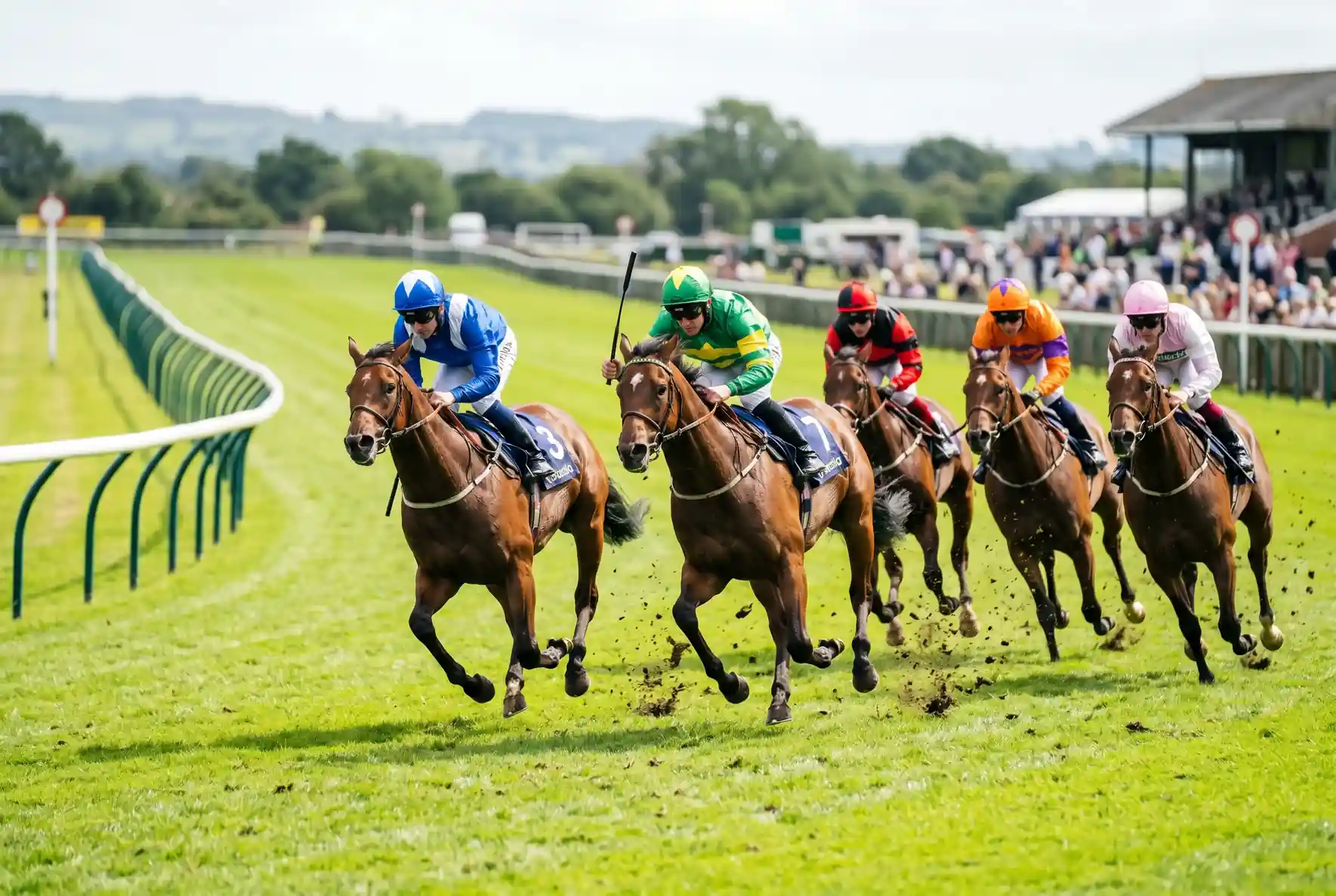
The first time I traded a race in-play, I missed the moment. A horse I had been watching drifted from 3.0 to 5.0 in roughly ten seconds when it was shuffled back rounding the home turn, and by the time I clicked to back it, the price was already contracting again as the horse found a gap. Ten seconds. That was the entire window, and I was too slow. Betfair data from a study of UK racing markets showed that new bets were matched approximately every 50 seconds across 73 active markets — but in the heat of a single race, prices shift far faster than that average suggests.
In-play horse racing betting is the most demanding discipline in the sport. It rewards punters who can read a race as it unfolds, react to positional changes in real time, and execute decisions under pressure. It also punishes hesitation, emotional overreaction and poor preparation. If pre-race betting is chess, in-play is speed chess — the same principles apply, but the clock is merciless.
How In-Play Betting Works on Exchanges and With Bookmakers
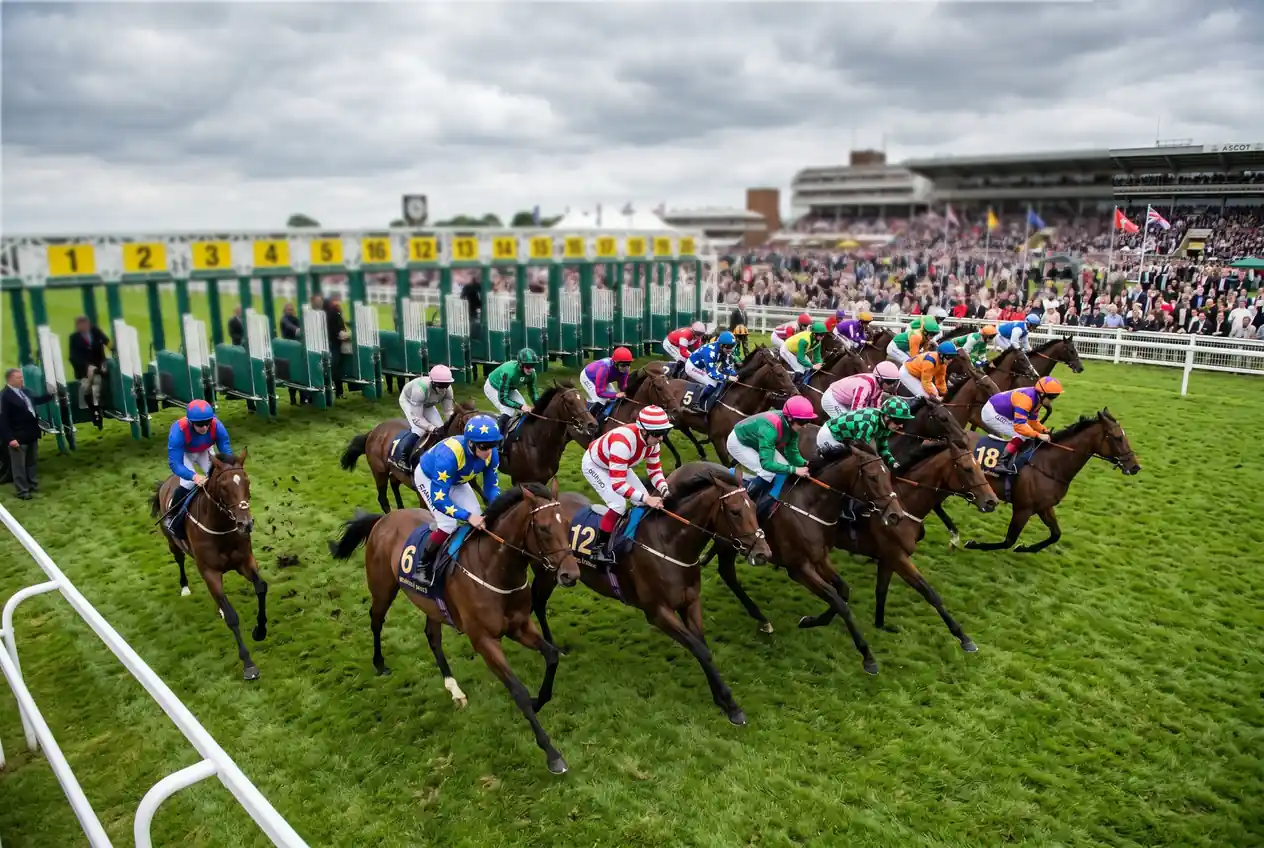
On betting exchanges, in-play markets remain open from the moment the stalls open (or the tape rises) until the horses cross the finish line. Prices update continuously based on what is happening in the race. A horse that breaks cleanly and sits in a prominent position will see its price shorten. A horse that gets hampered at the start or drops to the rear will drift. Researchers studying exchange market efficiency found remarkably high levels of informational efficiency in these returns, meaning that in-play prices rapidly incorporate the observable information from the race.
With bookmakers, in-play options are more limited. Some offer “cash out” during a race, which effectively lets you settle your pre-race bet at a recalculated price based on the in-play market. A few offer direct in-play betting on selected races, but the prices are typically less competitive than exchange odds, and there is often a built-in delay of several seconds between your bet request and acceptance — the bookmaker’s protection against latency exploitation.
The exchange is the natural home for in-play trading. The ability to both back and lay means you can open a position before the race and close it during the race, locking in a profit or cutting a loss depending on how events unfold. This is trading rather than betting in the traditional sense, and it requires a fundamentally different skillset.
Recommended online casinos
- BeOnBetBonus: 100% up to €500 + 100 FS · Payout speed: 1-3 business days
- Revery PlayBonus: 100% up to€1,000+ 100 FS · Payout speed: 1-3 business days
- ChanzeBonus: Slots Welcome Bonus #1 200% up to €500 · Payout speed: 1-3 business days
- JetsetspinsBonus: 200% Bonus + 100 Free Spins + Free Royal Wheel · Payout speed: 1-3 business days
- DieselwinBonus: Welcome Pack 250% up to £4000 + 200 FS · Payout speed: 1-3 business days
- ZombillionBonus: Welcome Pack 250% up to £4000 + 200 FS · Payout speed: 1-3 business days
- WinBeastBonus: €5000 + 500 FS + €650 Freebet · Payout speed: 1-3 business days
- NightWinBonus: £900 + 400 free spins · Payout speed: 1-3 business days
- SpinFormulaBonus: 550% Up To £15,000 + 550 FS · Payout speed: 1-3 business days
Race-Reading Skills: Position, Pace and Running Style
You cannot trade a race you cannot read. And reading a race is a skill that takes hundreds of hours of deliberate practice. I spent an entire jumps season watching replays with the sound off, pausing at each furlong marker to predict where each horse would be at the next. Slow, tedious work — but it taught me to see patterns that most punters miss entirely.
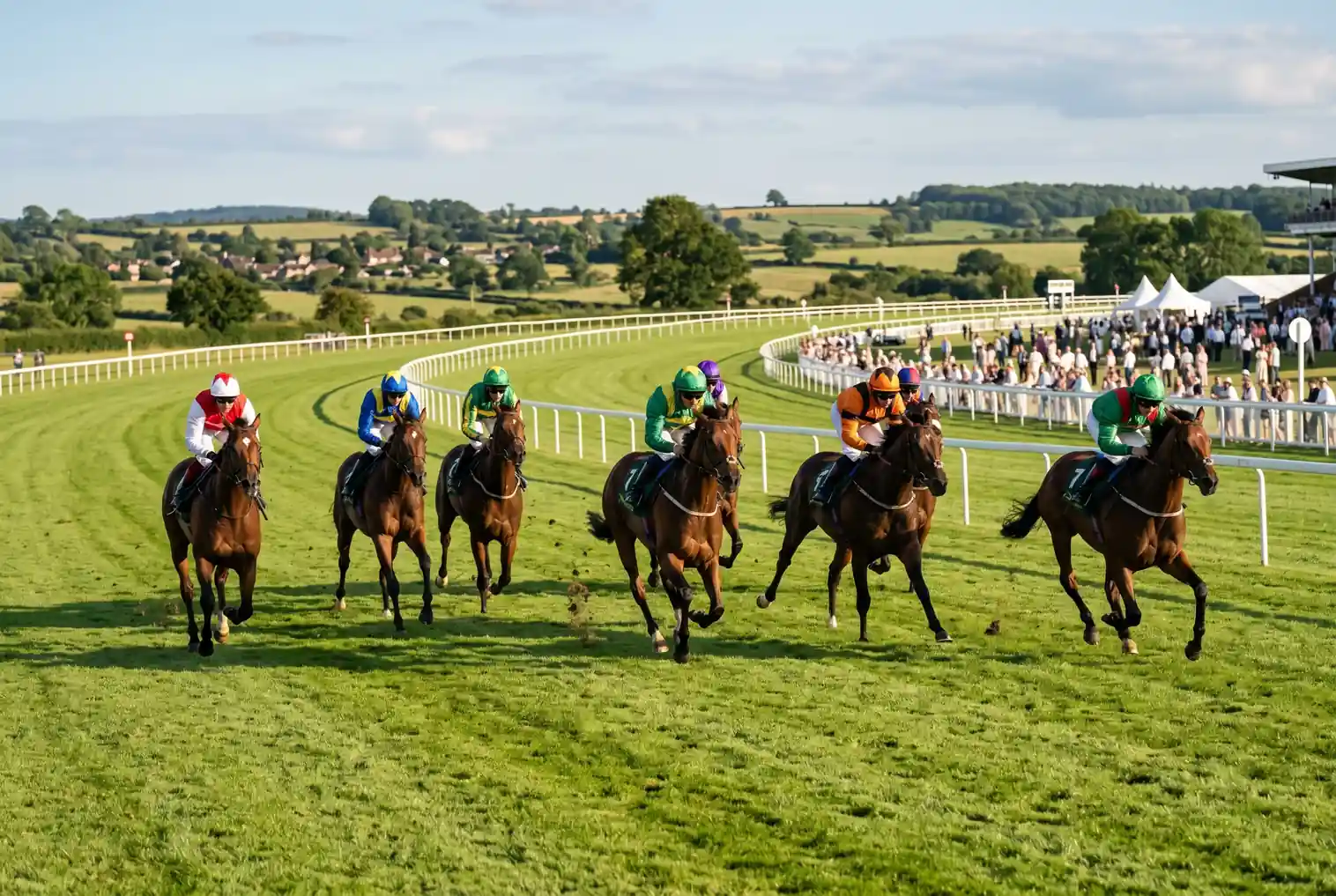
Position in the field matters more than speed at any given moment. A horse sitting third on the inside rail, two lengths off the leader, is in a strong position because it is saving ground and can pick up the leader when the pace slackens. A horse sitting third on the outside, wide through the turns, is covering extra distance that compounds over every furlong. The in-play price of these two horses should be different, and often it is — but not always quickly enough for you to exploit.
Pace reading is about recognising whether the race is being run to suit front-runners or closers. If the early pace is fast — the first two furlongs significantly quicker than the average for the class and distance — the front-runners are likely to tire and the closers benefit. If the pace is slow, the race often turns into a sprint from the two-furlong pole, favouring horses with tactical speed and a prominent position. Knowing which scenario is unfolding gives you the basis for an in-play trade: back closers when the pace is hot, back prominent racers when the pace is slow.
Three Practical In-Play Strategies for Different Race Types
For National Hunt races over three miles or more, the “lay the leader at halfway” strategy has been my most reliable in-play angle. In long-distance chases, the horse leading at the halfway mark often fades in the final mile, especially on soft or heavy ground. If the leader’s in-play price has shortened to 2.0 or shorter at the halfway point, laying at that price and waiting for the inevitable weakening in the final four fences can produce a consistent edge. The key filter: only apply this when the going is soft or worse, because firm-ground leaders are more likely to sustain the effort.
For exchange-hosted flat sprints (five and six furlongs), the “back the prominent racer at the furlong pole” approach exploits the fact that sprint races are often decided by the horse that hits the front at the one-furlong marker. If a horse is travelling strongly in second or third with a furlong to run and the leader is coming back to the field, backing at that moment — when the market has not yet fully adjusted — captures value before the price collapses in the final 200 yards.
For middle-distance flat races (ten to twelve furlongs), watch for “the squeeze.” This occurs when the pace has been steady and the field bunches approaching the final turn. The horse on the rail has the shortest route but risks being boxed in. The horse wide has the longest route but a clean run. In-play prices on the boxed horse often drift dramatically even when the horse has every chance if it finds a gap. Backing at the inflated price before the gap appears is a high-risk, high-reward play — but one that pays generously when it comes off.
Latency, Emotion and the Hidden Costs of In-Play Trading
Latency is the delay between what is happening on the track and what you see on your screen. Even with live streaming, there is typically a 1-3 second delay. On an exchange where prices are moving every few seconds, that gap matters. You see a horse making a move, but the exchange market has already priced it in before your stream catches up. Betfair UK has invested in predictive AI for odds calculation, reducing settlement delays by 28%, but the streaming delay for punters remains a structural disadvantage.
Emotion is latency’s accomplice. In-play betting triggers adrenaline in a way that pre-race analysis does not, and adrenaline is the enemy of rational decision-making. I have watched experienced punters — people who are disciplined and methodical pre-race — turn into impulsive chasers the moment a race goes live. The speed of in-play markets amplifies every emotional bias: chasing a loss, doubling down on a sinking position, refusing to close a trade because “it might come back.”
Set rules before the race starts. Decide your maximum in-play stake, your exit trigger and the scenario you are trading. If the scenario does not materialise, do nothing. The hardest skill in in-play betting is watching a race and not betting. Most races do not produce a tradeable opportunity, and forcing one is the quickest route to a negative session.
Do I need a streaming service to bet in-play on horse racing?
A live stream is strongly recommended because in-play trading depends on reading the race as it unfolds. Most exchanges and major bookmakers offer free streaming to funded accounts. Without a stream, you are relying on price movements alone to guess what is happening, which puts you at a severe disadvantage against punters who can see the race.
How much latency is acceptable for profitable in-play trading?
A delay of 1-2 seconds is typical and manageable for most in-play strategies. Beyond 3 seconds, the market has usually already repriced to reflect whatever you are reacting to, making it very difficult to capture value. Wired internet connections and dedicated streaming devices reduce latency compared to mobile data or Wi-Fi.
Which race types are best suited to in-play betting?
Long-distance National Hunt races (three miles plus) and middle-distance flat races (ten to twelve furlongs) offer the most in-play opportunities because the race develops over a longer period, giving you more time to read the pace and position. Short sprints are harder to trade because the entire race unfolds in about 60 seconds.
The full picture is in our data-driven guide to horse racing betting.
The market that runs it: betting exchanges.
Prepared by the Tips for Horse Racing Betting editorial staff.