How to Read a Racecard: Every Column, Symbol and Number Decoded
Best Horse Racing Betting Sites – Bet on Horse Racing in 2026
 Available in US
Table of Contents
- A Racecard Packs More Data into One Page Than Most Punters Ever Unpack
- Recommended online casinos
- Race Header: Time, Class, Distance, Prize Money and Going
- Horse Entry: Draw, Form String, Weight, Headgear and Official Rating
- Connections: Trainer, Jockey and Owner — What to Look For
- Betting Forecast and Tissue Prices on the Card
- Digital Racecards vs Print: Additional Data You Get Online
A Racecard Packs More Data into One Page Than Most Punters Ever Unpack
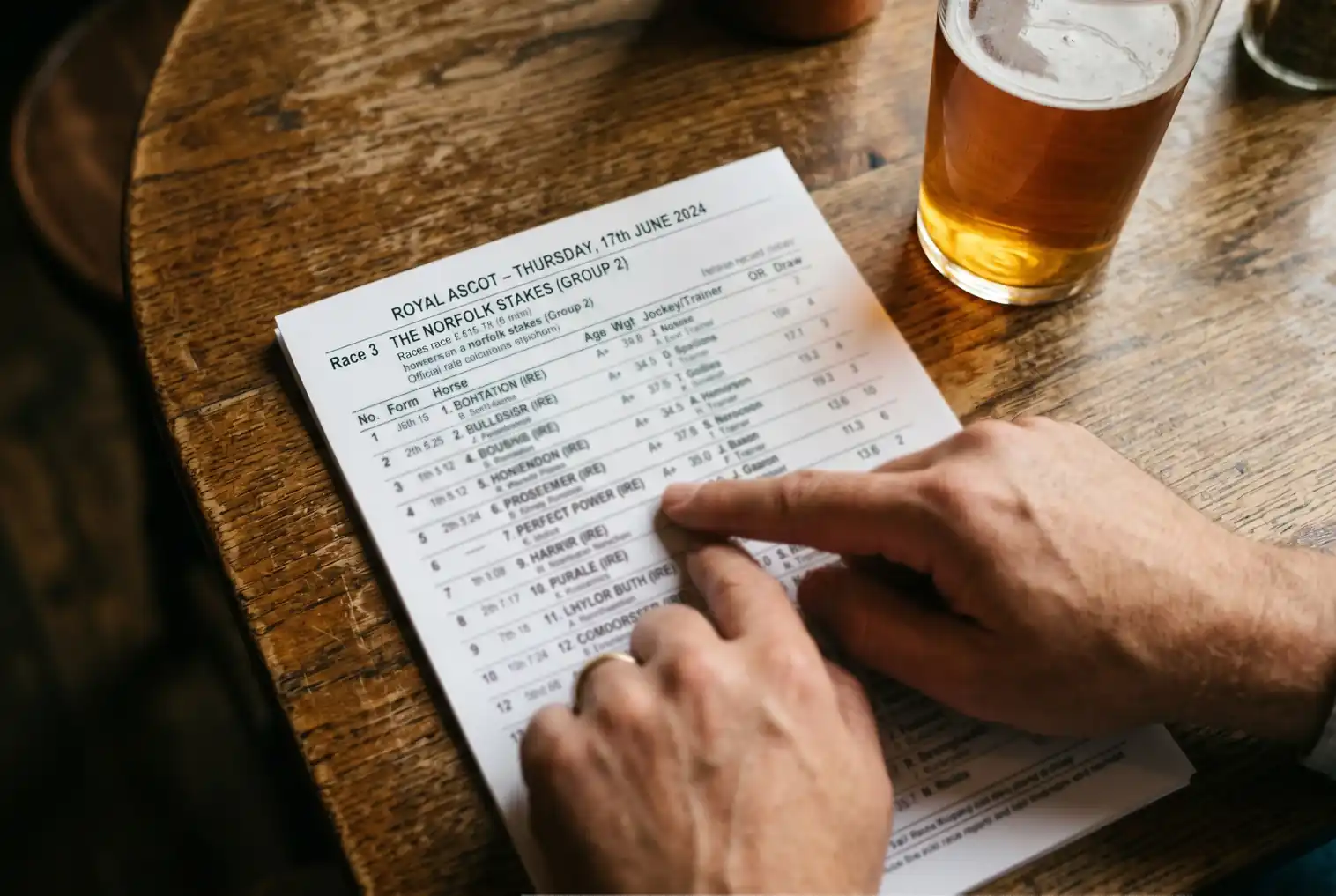
I spent my first year betting by looking at names and prices. If the name sounded strong and the odds were not too long, on it went. The racecard was a wall of numbers and letters that I glanced at without reading. It took an afternoon at Kempton with a friend who had been punting for twenty years to change that. He pointed at one line on the card and, in about ninety seconds, told me the horse’s recent form, its going preference, whether the trainer was having a good month, and why the jockey booking suggested confidence. All from a single line on a racecard. Horse racing is the second-largest sport in the UK after football by attendance and revenue, and every bit of information the industry generates for punters starts on that card. Learning to read it properly is the single biggest return on time you will invest.
The DCMS Select Committee itself noted that horseracing is interlinked with the gambling sector, with race programmes developed partly to provide a consistent betting product. The racecard is the punter’s interface with that product — and this article decodes it column by column.
Recommended online casinos
- BeOnBetBonus: 100% up to €500 + 100 FS · Payout speed: 1-3 business days
- Revery PlayBonus: 100% up to€1,000+ 100 FS · Payout speed: 1-3 business days
- ChanzeBonus: Slots Welcome Bonus #1 200% up to €500 · Payout speed: 1-3 business days
- JetsetspinsBonus: 200% Bonus + 100 Free Spins + Free Royal Wheel · Payout speed: 1-3 business days
- DieselwinBonus: Welcome Pack 250% up to £4000 + 200 FS · Payout speed: 1-3 business days
- ZombillionBonus: Welcome Pack 250% up to £4000 + 200 FS · Payout speed: 1-3 business days
- WinBeastBonus: €5000 + 500 FS + €650 Freebet · Payout speed: 1-3 business days
- NightWinBonus: £900 + 400 free spins · Payout speed: 1-3 business days
- SpinFormulaBonus: 550% Up To £15,000 + 550 FS · Payout speed: 1-3 business days
Race Header: Time, Class, Distance, Prize Money and Going
Before you look at any horse, read the race header. It tells you the time of the race, the course, the class, the distance in furlongs (or miles and furlongs for longer races), the prize money and the official going. Each of these shapes your analysis.
Class ranges from Class 1 (Group and Graded races) down to Class 7 (the lowest level of handicap). Total prize money in British racing reached £153 million in 2025, and that money filters down through the class system. Higher-class races attract better horses, and the form from a Class 2 handicap is worth more than the form from a Class 6 seller. When a horse drops or rises in class, adjust your expectation accordingly — a horse that was beaten four lengths in a Class 3 might be the standout form horse in a Class 5.
The going — declared at the top of the card — tells you the ground conditions. It is the first check you should make: if a horse in the race has no form on today’s going, flag it immediately. Distance is listed in furlongs (1 furlong = 220 yards). Most racecards also note the race conditions: handicap, novice, maiden, conditions, listed, Group. Each race type has implications for how you assess the runners.
Horse Entry: Draw, Form String, Weight, Headgear and Official Rating
Each horse’s line on the card contains a compressed biography. The stall draw number appears first on most cards. The form string follows — a sequence of numbers and letters that represents the horse’s recent finishing positions. A string like 312-1 means third, first, second in the last three runs before a break, then first on the latest start. A “0” means finished outside the first nine. Letters carry specific meanings: F for fell, P for pulled up, U for unseated rider, R for refused, B for brought down, C for the horse has won at this course, D for won at this distance, BF for beaten favourite.
Weight is shown in stones and pounds. In handicaps, the weight is determined by the handicapper based on the horse’s official rating. Higher-rated horses carry more weight to level the playing field. In non-handicap races, weight is determined by age and sex allowances. A three-year-old running against older horses receives a weight allowance because younger horses are still developing.
Headgear symbols are easy to overlook but important. A “t” indicates a tongue-tie (prevents the horse from getting its tongue over the bit, which can restrict breathing). “v” is a visor (limits peripheral vision to help the horse concentrate). “b” is blinkers (restricts vision more aggressively). “h” is a hood (covers the ears to calm nervous horses). “p” is cheekpieces (less restrictive than blinkers). First-time headgear is particularly significant — when a trainer adds blinkers or a visor for the first time, it often signals an attempt to unlock improvement.
The official rating (OR) is the BHA’s assessment of the horse’s ability, expressed as a number. The higher the number, the better the horse. In handicaps, the weight a horse carries is directly linked to its OR. A horse rated 85 might carry 9st 7lb while a horse rated 75 in the same race carries 8st 11lb. The OR is a useful anchor: if you believe a horse is better than its rating suggests, you may have found value.
Connections: Trainer, Jockey and Owner — What to Look For
The trainer and jockey columns are not just names — they are signals. Around 80% of UK races are won by the top 20% of trainers and jockeys at each track, which means the first filter for most races is straightforward: check who is saddling and riding. A trainer with a 25% strike rate at the course sends a different message than one hitting 5%.
Jockey bookings carry intent. When a leading trainer books a top jockey for a relatively low-key midweek race, it often suggests confidence. When the trainer’s usual jockey is replaced by an apprentice, it may indicate the horse is not fancied. The apprentice’s claim — a weight allowance of 3lb, 5lb or 7lb depending on the number of career wins — can also be a tactical tool: some trainers deliberately use apprentices on well-handicapped horses to claim the extra weight off.
The owner column is less commonly used but occasionally valuable. When a major owner whose horses run primarily with one trainer suddenly runs one elsewhere, it can indicate political decisions within the yard or a fresh approach. Owner silks also help you spot horses in the paddock and during the race if you are watching live.
Betting Forecast and Tissue Prices on the Card
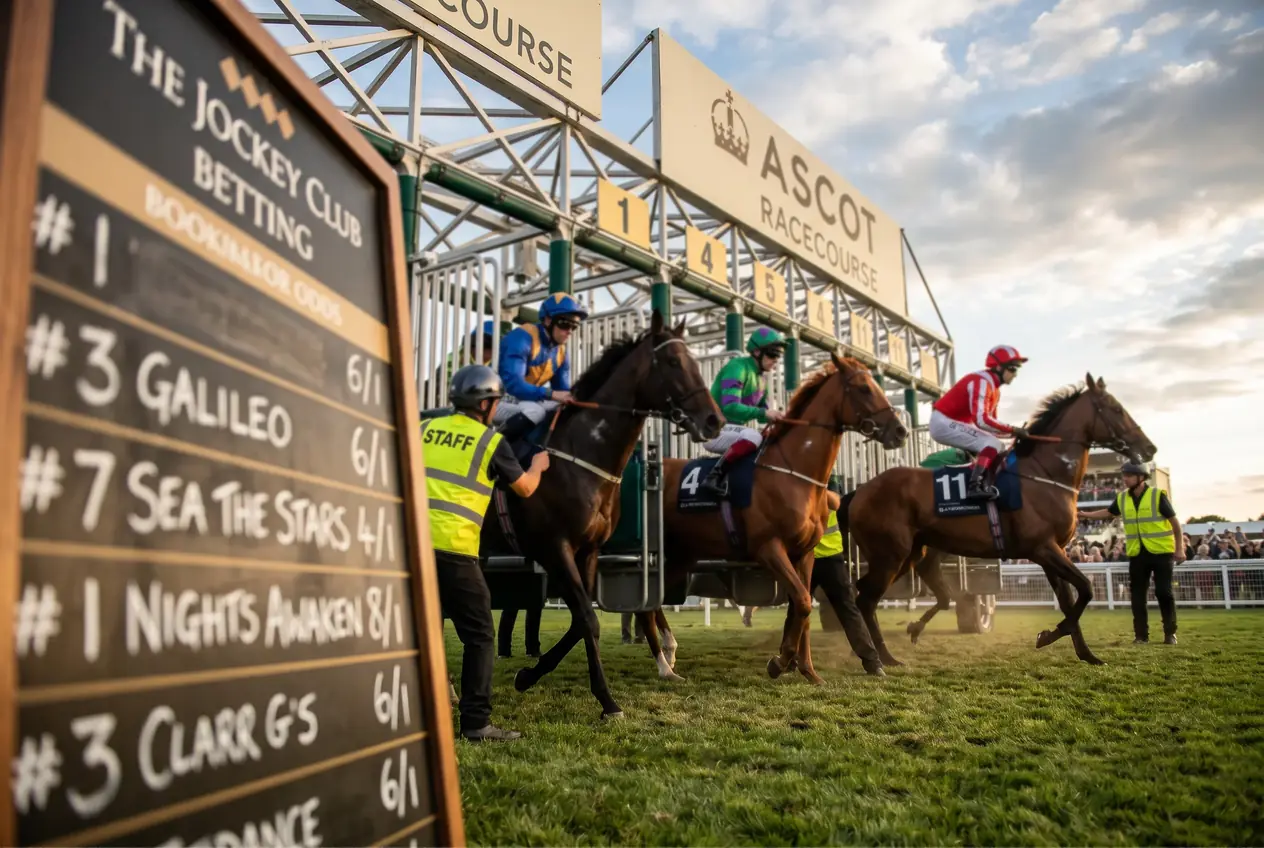
Many printed and digital racecards include a betting forecast — the predicted order of favouritism based on early market activity. These forecasts give you a rough guide to how the market views the race before the serious money arrives. The tissue price is a more refined version: an estimated set of odds for every runner, compiled by the card’s compilers based on form analysis.
Neither the forecast nor the tissue is definitive. Prices change, sometimes dramatically, in the final 30 minutes before a race. But the forecast is useful for context. If a horse you fancy is a 12/1 chance in the forecast, you know the market considers it an outsider — which means the value proposition is higher if your analysis is correct. If it is a 5/4 favourite, you know you are aligned with the crowd, which raises the question: is there enough value in the price to justify the bet?
Experienced punters compare tissue prices against actual opening odds. Significant discrepancies — a horse priced at 8/1 in the tissue but opening at 4/1 — suggest stable confidence or informed money entering the market. The reverse (tissue 4/1, opening 10/1) suggests the market has information that the tissue compiler did not have.
Digital Racecards vs Print: Additional Data You Get Online
Print racecards remain popular at the track, but digital versions offer substantially more information. Online racecards on platforms like Racing Post and Timeform include past comment lines for each horse (describing how it ran, not just where it finished), going-by-going records, trainer and jockey statistics at the course, speed ratings, and direct links to full form pages. Connecting the racecard data to a deeper form analysis transforms a quick glance into a structured selection process.
The additional layers available digitally save significant time. Instead of manually checking each horse’s going preference, the digital card displays it in a filterable format. Instead of remembering which trainers have a good record at the course, the statistics are right there. I use a printed card at the track for the visceral experience but do my actual analysis on a digital card beforehand, usually the evening before or early on the morning of racing.
One advantage of digital cards that few punters exploit: the ability to sort and filter. Some platforms let you sort by official rating, weight carried, draw position or trainer strike rate. This is a quick way to identify the horses that tick the most boxes before you dive into the detail. If a horse has the highest official rating, a favourable draw, a trainer with a 20%+ course strike rate and first-time headgear, you should at least be looking at it — even if the name means nothing to you.
What does the ‘C’ next to a horse’s name mean on a UK racecard?
The letter C indicates the horse has won previously at this course. It is a useful flag because course form suggests the horse handles the track layout, turns, gradients and distance. A horse with a C against a course with known quirks — like Chester’s tight bends or Epsom’s camber — is more likely to handle those challenges again.
How do I find a digital racecard before a meeting?
Racing Post, Timeform and At The Races all publish digital racecards, usually available from the evening before a race meeting. Most bookmaker apps and websites also display racecards with form figures. For free options, the Racing Post website offers basic racecards without a subscription, though premium features like speed ratings and detailed form comments require a paid account.
What headgear symbols should I pay attention to when reading a racecard?
First-time headgear applications are the most significant. A horse wearing blinkers (b), a visor (v) or cheekpieces (p) for the first time is being given equipment to address a specific issue — usually a tendency to idle, hang or lose concentration. Statistical evidence shows that first-time blinkers produce a slightly higher win rate than the horse’s previous form would suggest, making it a positive signal worth noting.
The full picture is in our data-driven guide to horse racing betting.
The form string in detail: the form guide.
Written by the editors at Tips for Horse Racing Betting.