Betting Exchange vs Bookmaker: Which Gives Horse Racing Punters Better Value?
Best Horse Racing Betting Sites – Bet on Horse Racing in 2026
 Available in US
Table of Contents
- Two Systems, Two Pricing Models — and the Difference Compounds Over Hundreds of Bets
- How Betting Exchanges Match Backers and Layers
- Odds Comparison: Why Exchange Prices Are Typically Higher
- Commission vs Overround: Calculating the True Cost of Each Bet
- Liquidity, Bet Limits and When Bookmakers Still Win
- Choosing by Scenario: Exchange for Value, Bookmaker for Convenience
- Recommended online casinos
Two Systems, Two Pricing Models — and the Difference Compounds Over Hundreds of Bets
I placed my first exchange bet in 2017, and looking back at my records from that month, the difference was immediate. The same horse, the same race, and the exchange consistently offered prices 5-15% longer than the best bookmaker. Over a single bet, that gap barely registers. Over a thousand bets, it is the difference between a losing year and a profitable one. Research analysing over a million price signals across 73 Betfair markets found a remarkably high level of informational efficiency in exchange returns — which tells you something about just how well these markets function when enough money flows through them.
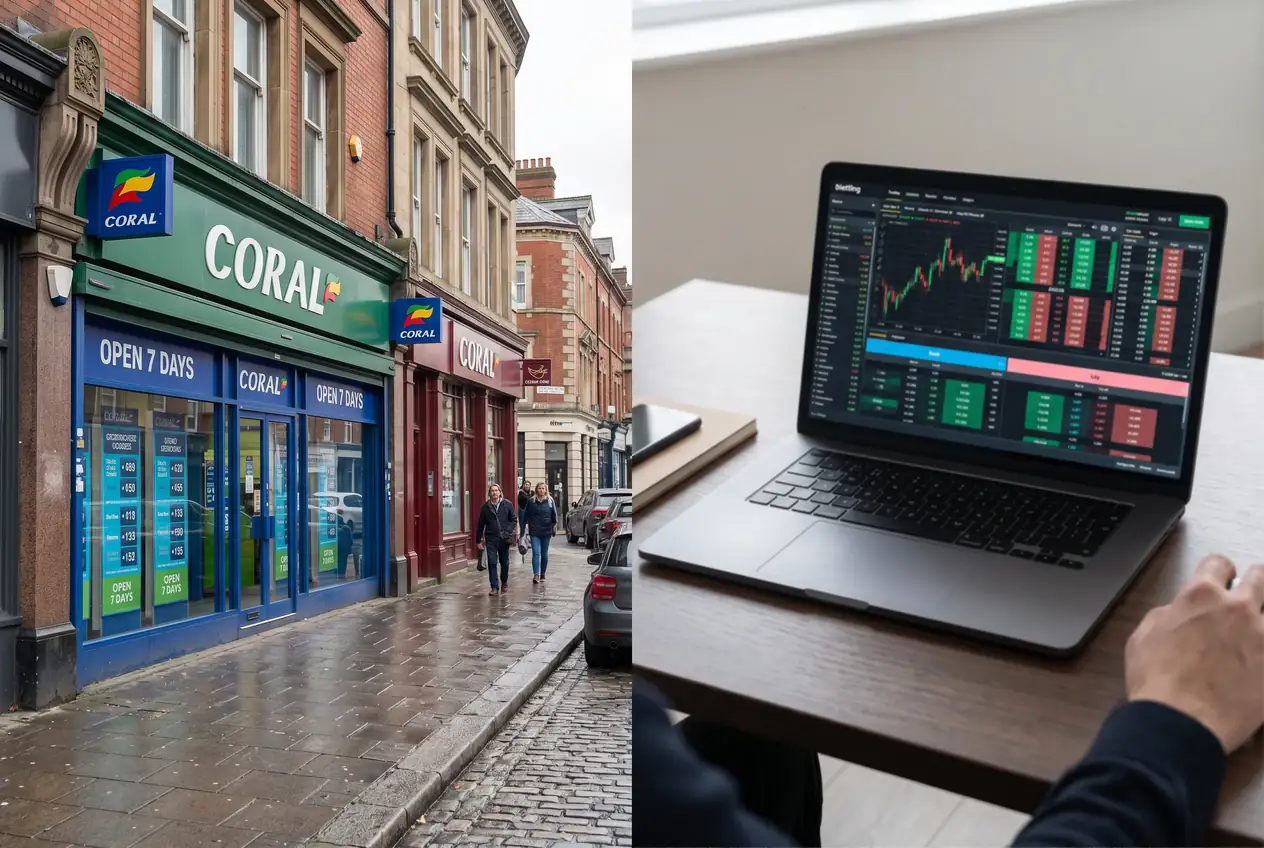
The exchange model and the bookmaker model solve the same problem — matching people who want to bet — in fundamentally different ways. Understanding those differences is not academic. It directly determines how much of your stake goes to the market-maker and how much stays in your pocket.
How Betting Exchanges Match Backers and Layers
A betting exchange is a peer-to-peer platform. When you back a horse at 5.0, another user is laying that horse at 5.0. The exchange does not set the prices and does not take a position on the outcome. It simply matches the two sides and takes a commission on the winner’s net profit — typically 2-5%, depending on the platform and your activity level.
Prices on exchanges are set by supply and demand. If more money wants to back a horse than lay it, the back price shortens. If more money wants to lay, the price drifts. This creates a live market that reacts to information in real time. New data from Betfair showed that bets on UK racing were matched approximately every 50 seconds across busy markets, with over a million individual price signals generated on a single set of 73 markets. That frequency of activity means exchange prices are remarkably efficient — they absorb new information (a jockey change, a going update, stable confidence) faster than most bookmaker odds departments can adjust.
The flipside is that exchange prices require two willing parties. If nobody wants to lay your horse at the price you want, the bet does not get matched. This is the liquidity question, and it affects every decision about when and how to use an exchange.
Odds Comparison: Why Exchange Prices Are Typically Higher
The reason exchange odds beat bookmaker odds in the majority of cases comes down to a single concept: the overround. UK remote betting generated £2.6 billion in gross gambling yield in the 2024-25 financial year, and a meaningful chunk of that comes from the margin built into bookmaker prices via the overround.
A bookmaker prices a six-runner race so that the combined implied probabilities add up to, say, 120%. That extra 20% is their built-in margin — the overround. On an exchange, because prices are set by competing users rather than a single entity protecting a margin, the combined implied probabilities typically sit much closer to 100%, often between 101% and 105%. The difference between a 120% book and a 103% market is 17 percentage points of margin that stays in the punter’s pocket instead of the bookmaker’s till.
Translated into practical terms: a horse priced at 4/1 with a bookmaker might be available at 9/2 or even 5/1 on the exchange. On a £10 back bet, that is the difference between a £40 return and a £50 return. Multiply that across a season of 300+ bets and the impact is substantial.
Commission vs Overround: Calculating the True Cost of Each Bet
The exchange charges commission, and that needs to be factored into any honest comparison. At 5% commission on net winnings, a winning bet at 5.0 for £10 returns £40 profit, of which £2 goes to the exchange, leaving £38. With a bookmaker, the same bet at 4/1 returns £40 profit with no commission deducted.
So the exchange wins on gross odds but takes a slice of the profit. The net comparison depends on the size of the odds difference. If the exchange price is 5% longer than the bookmaker price, and commission is 5%, the two roughly cancel out on a single bet. But exchange prices are often 10-20% longer, which means even after commission, the exchange delivers a better net return.
I track my own average exchange advantage by comparing every exchange bet I place against the best bookmaker price available at the same moment. Over the last 14 months, the average exchange improvement after commission was 7.2%. That is not a dramatic number on any individual bet, but compounded over the 400+ bets I placed in that period, it accounted for roughly £900 of additional profit. Commission is the cost of doing business on an exchange; the overround is the cost of doing business with a bookmaker. For most serious horse racing punters, the exchange cost is lower.
Liquidity, Bet Limits and When Bookmakers Still Win
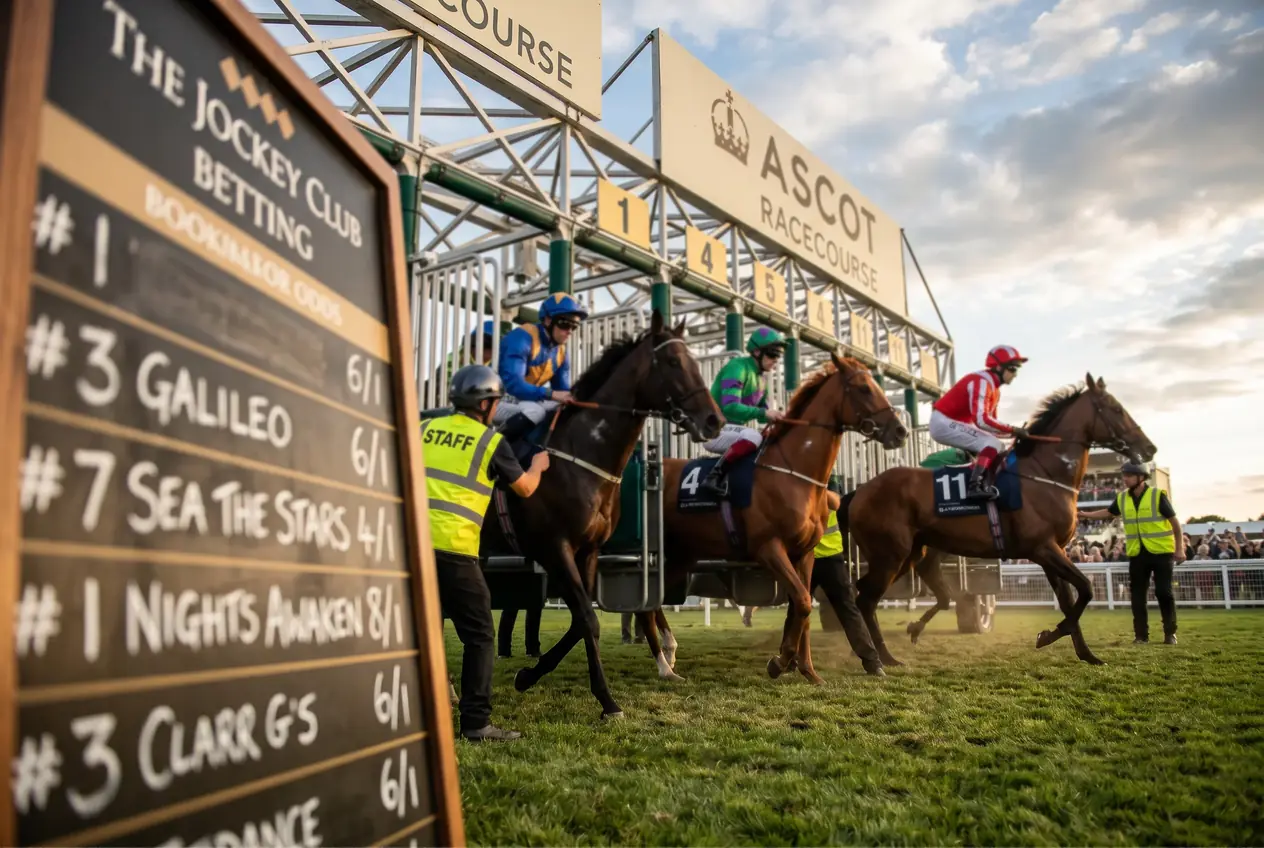
Liquidity is the exchange’s Achilles heel. On a televised Saturday handicap at Ascot, exchange liquidity is deep — you can match four-figure bets at competitive prices without moving the market. On a Monday evening all-weather race at Wolverhampton, you might struggle to get £50 matched at the price you want.
Bookmakers face no such constraint. Their prices are available to all comers up to the advertised limit. For punters who bet on lower-profile midweek meetings, bookmakers offer guaranteed execution that exchanges cannot match. Best Odds Guaranteed — a feature where the bookmaker pays out at SP if it is higher than the price you took — is another area where bookmakers add value that exchanges do not replicate.
Account restrictions are the bookmaker’s dark side. Consistently winning punters can have their stakes limited or their accounts closed. Exchanges do not restrict winners because the exchange profits from commission regardless of who wins. If you are good enough to show a long-term profit, the exchange is the platform that will continue to accommodate you.
Choosing by Scenario: Exchange for Value, Bookmaker for Convenience
My approach is simple and has not changed in five years. For feature races, Saturday cards and any meeting with televised coverage, I bet on the exchange. The liquidity is there, the prices are better, and I can lay as well as back if the market moves against me before the off.
For midweek racing, early-morning prices and ante-post markets where exchange liquidity is thin, I use bookmakers. The price might be slightly shorter, but guaranteed execution matters when you have identified a selection and need to lock it in before the market moves.
Some punters use both platforms on the same race — backing with a bookmaker at a price they are happy with, then monitoring the exchange to see if a better price appears as the off approaches. If it does, they back on the exchange and hedge the bookmaker bet. This arbitrage-adjacent approach requires quick execution and comfortable multitasking, but it is perfectly legitimate and can squeeze an extra point or two of value from races where prices are moving sharply.
Do betting exchanges charge commission on losing bets?
No. Exchange commission is charged only on net winnings. If you lose a bet, you pay no commission. The standard commission rate is 5% of net profit on winning bets, though frequent users can negotiate lower rates on some platforms. This means your losing bets cost exactly the stake, with no additional margin taken.
Is there enough liquidity on exchanges for UK horse racing?
For feature races, Saturday meetings and televised cards, liquidity is generally strong enough to match three- and four-figure bets at competitive prices. For lower-profile midweek racing and evening all-weather meetings, liquidity can be thin, making it harder to get large bets matched. The closer you are to the off time, the deeper the liquidity becomes.
Can I use a betting exchange and a bookmaker for the same race?
Yes. Many experienced punters compare prices across both platforms and place their bet wherever the value is better. You can also back with one and lay with the other to lock in a profit or limit a loss. There is no rule against using multiple platforms for the same race.
The full picture is in our data-driven guide to horse racing betting.
Opposing a horse on the exchange: lay betting.
Recommended online casinos
- BeOnBetBonus: 100% up to €500 + 100 FS · Payout speed: 1-3 business days
- Revery PlayBonus: 100% up to€1,000+ 100 FS · Payout speed: 1-3 business days
- ChanzeBonus: Slots Welcome Bonus #1 200% up to €500 · Payout speed: 1-3 business days
- JetsetspinsBonus: 200% Bonus + 100 Free Spins + Free Royal Wheel · Payout speed: 1-3 business days
- DieselwinBonus: Welcome Pack 250% up to £4000 + 200 FS · Payout speed: 1-3 business days
- ZombillionBonus: Welcome Pack 250% up to £4000 + 200 FS · Payout speed: 1-3 business days
- WinBeastBonus: €5000 + 500 FS + €650 Freebet · Payout speed: 1-3 business days
- NightWinBonus: £900 + 400 free spins · Payout speed: 1-3 business days
- SpinFormulaBonus: 550% Up To £15,000 + 550 FS · Payout speed: 1-3 business days
Written by the editors at Tips for Horse Racing Betting.