Affordability Checks in Horse Racing Betting: What They Mean
Best Horse Racing Betting Sites – Bet on Horse Racing in 2026
 Available in US
Table of Contents
- Since February 2025, Every UK Punter Spending More Than £150 a Month Faces a Financial Check
- How Affordability Checks Work: Thresholds, Triggers and the Frictionless Process
- Recommended online casinos
- The Practical Impact: Delays, Account Restrictions and Workarounds
- How the Racing Industry and Bookmakers Have Responded
- Adapting Your Betting Approach Under the New Rules
Since February 2025, Every UK Punter Spending More Than £150 a Month Faces a Financial Check
I got my first affordability check notification in March 2025. I had been betting regularly with the same bookmaker for six years, and suddenly my account was restricted until I provided additional financial information. The trigger? My monthly activity had crossed the £150 threshold that the Gambling Commission introduced in February 2025 — down from the original £500 level. It felt intrusive, but the process itself was faster than I expected. Understanding how these checks work, what triggers them and how they affect your betting is now essential knowledge for any UK punter who takes horse racing seriously.
The checks are part of the Gambling Commission’s broader strategy to prevent gambling harm. The intention is sound — protecting vulnerable people from spending beyond their means. The implementation, however, has reshaped how punters interact with bookmakers, and not all the consequences were anticipated.
How Affordability Checks Work: Thresholds, Triggers and the Frictionless Process
The system operates in tiers. The £150-per-month threshold triggers a “light-touch” check. The Gambling Commission reported that 95% of approximately 530,000 checks conducted passed frictionlessly through credit agency data. In practice, this means the bookmaker runs an automated check against your credit file to verify that your gambling activity is consistent with your financial profile. If the automated check confirms affordability, you may not even notice it happened — no email, no account restriction, no interruption to your betting.
Higher spending levels trigger more intensive checks. At £500 per month or £2,000 per year, the bookmaker may request additional evidence: payslips, bank statements, proof of income, or a self-declaration of your financial circumstances. These “enhanced” checks require active engagement from the punter and can result in account restrictions while the information is being processed. The timeline varies — some bookmakers resolve enhanced checks within 48 hours, others take weeks.
The automated layer is powered by credit reference agencies like Experian and TransUnion. The bookmaker sends a request, the agency returns a risk profile, and the decision is made without human intervention. This is why the Gambling Commission can claim the process is largely frictionless — for the majority of punters, it is. But for anyone whose financial circumstances are complex (self-employed, irregular income, high savings but low regular salary), the automated check may flag a false positive, triggering the enhanced process unnecessarily.
Recommended online casinos
- BeOnBetBonus: 100% up to €500 + 100 FS · Payout speed: 1-3 business days
- Revery PlayBonus: 100% up to€1,000+ 100 FS · Payout speed: 1-3 business days
- ChanzeBonus: Slots Welcome Bonus #1 200% up to €500 · Payout speed: 1-3 business days
- JetsetspinsBonus: 200% Bonus + 100 Free Spins + Free Royal Wheel · Payout speed: 1-3 business days
- DieselwinBonus: Welcome Pack 250% up to £4000 + 200 FS · Payout speed: 1-3 business days
- ZombillionBonus: Welcome Pack 250% up to £4000 + 200 FS · Payout speed: 1-3 business days
- WinBeastBonus: €5000 + 500 FS + €650 Freebet · Payout speed: 1-3 business days
- NightWinBonus: £900 + 400 free spins · Payout speed: 1-3 business days
- SpinFormulaBonus: 550% Up To £15,000 + 550 FS · Payout speed: 1-3 business days
The Practical Impact: Delays, Account Restrictions and Workarounds
The most immediate impact for active horse racing punters is account restriction during the enhanced check process. If your account is suspended pending verification, you cannot place bets. For punters who rely on timing — ante-post markets, early prices, day-of-race value windows — an unexpected three-day suspension can mean missing critical opportunities. One in three punters staking £1,000 or more per transaction reported using unregulated sites in the previous twelve months, and the industry’s concern is that affordability friction is pushing some customers towards offshore operators with no consumer protections.
The Betting and Gaming Council estimates that 45,000 punters could migrate to unregulated markets due to checks, with a potential £13.2 million loss to the Horserace Betting Levy. Whether that estimate proves accurate is debatable, but the directional concern is valid: punters who feel restricted by regulated operators have alternatives, and those alternatives sit outside UK consumer protection.
Account closures and stake reductions are an indirect consequence. Bookmakers who determine through affordability data that a customer’s betting is disproportionate to their income may reduce maximum stakes, restrict access to certain markets, or close the account entirely. This is separate from the restriction of winning accounts — it is a regulatory-driven measure applied regardless of whether you are profitable or not.
How the Racing Industry and Bookmakers Have Responded
The racing industry has been vocal about affordability checks and their impact on betting turnover. The broader context of UK gambling regulation shapes how these checks fit into the industry landscape. Overall betting turnover on British racing dropped 12.8% over nine months in 2025 compared to 2023, and while affordability checks are not the sole cause, the industry argues they are a significant contributor. The British Horseracing Authority has publicly expressed concern that blanket checks are not proportionate and that measures should be targeted at specific individuals rather than applied universally.
Bookmakers have responded with a mix of compliance and lobbying. On the compliance side, most major operators have invested in faster automated checking systems to reduce the friction window. Some have introduced dedicated customer support lines for affordability queries, recognising that the process creates anxiety for legitimate customers. On the lobbying side, bookmakers and the Betting and Gaming Council have argued that the thresholds are too low, that the checks deter recreational punters from legal markets, and that the unregulated sector is the primary beneficiary of excessive friction.
The Gambling Commission maintains that the checks are proportionate and that the frictionless rate demonstrates their effectiveness. The tension between consumer protection and market functionality is unlikely to be resolved quickly, and punters should expect affordability checks to remain a permanent feature of UK regulated betting.
Adapting Your Betting Approach Under the New Rules
Practical adaptation starts with awareness. Know the thresholds and track your own spending. If you are approaching £150 in a calendar month across all accounts with a single operator, the automated check is coming. There is nothing to fear if your gambling is within your means, but being surprised by it creates unnecessary stress.
Maintain clean financial records. If an enhanced check is triggered, having payslips, bank statements and a clear picture of your income ready reduces the resolution time from weeks to days. Self-employed punters should keep their tax returns and accounts up to date for the same reason.
Spread your activity sensibly. Using multiple licensed bookmakers distributes your monthly spend across separate accounts, each with its own threshold tracking. This is not about evading checks — it is about reducing the likelihood of a single operator restricting your account during a busy racing period. Ensure every operator you use holds a UKGC licence; the 806 cease-and-desist letters issued in 2024-25 are a reminder that unlicensed operators exist and offer no protection.
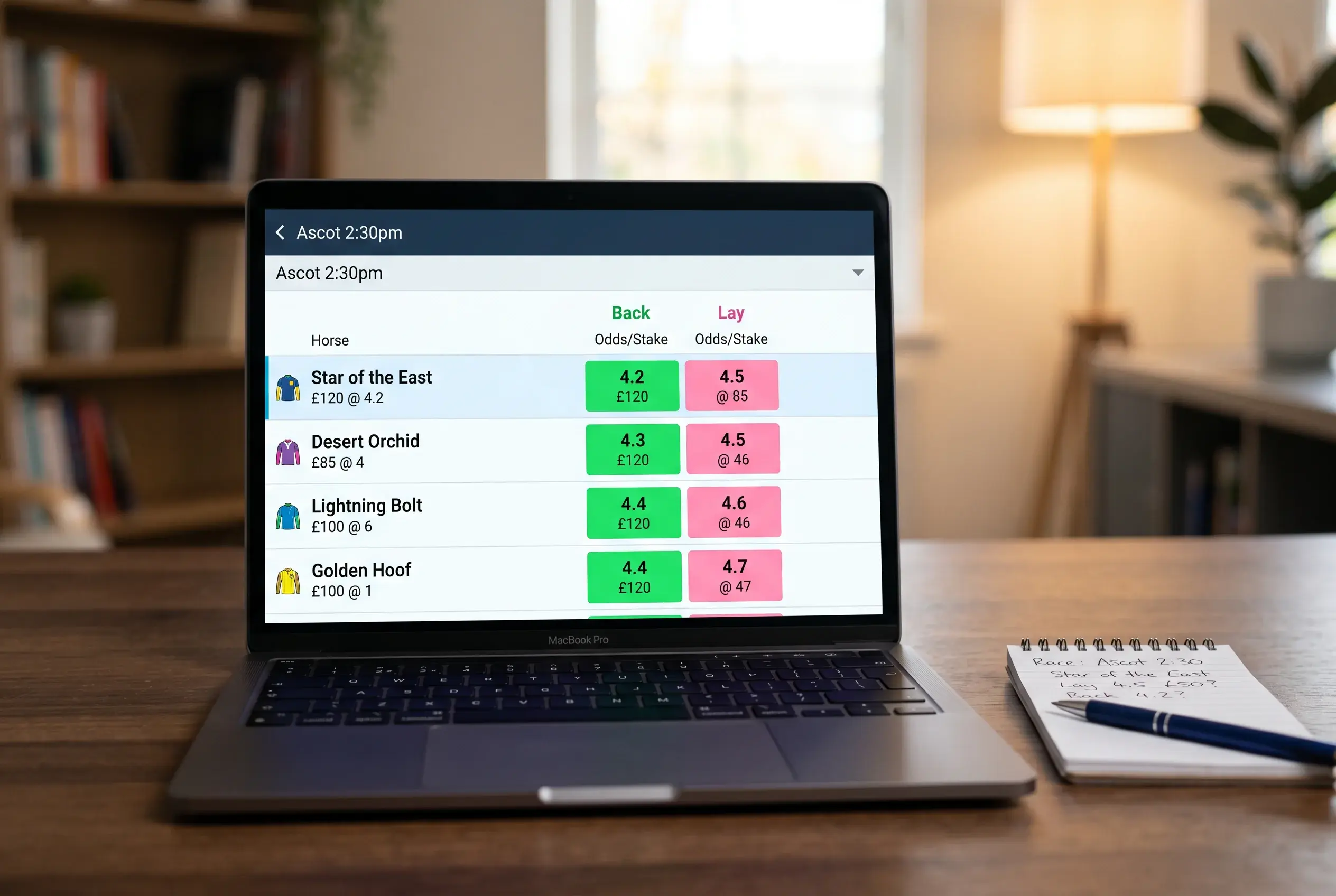
Consider exchange betting for higher-value activity. Affordability checks apply to all UKGC-licensed operators, including exchanges, but the exchange model means your net spending is calculated differently — a series of small winning and losing trades may not trigger the same thresholds as outright bookmaker stakes. This is not a loophole, simply a structural difference in how the platforms report customer activity.
Will an affordability check affect my credit score?
The Gambling Commission states that the checks are ‘soft’ credit searches, which do not appear on your credit file visible to lenders and do not affect your credit score. This is confirmed by the credit reference agencies involved. However, the check does access your financial data, so the bookmaker’s system receives information about your income and existing commitments.
What happens if I fail an affordability check with my bookmaker?
If the automated check indicates your gambling may be disproportionate to your assessed income, the bookmaker will typically restrict your account and request additional financial evidence. You can provide documentation to demonstrate affordability, after which the restriction may be lifted. If you cannot or choose not to provide evidence, the restrictions remain. In some cases, the bookmaker may permanently reduce your stake limits.
Can I avoid affordability checks by using a betting exchange?
Affordability checks apply to all UKGC-licensed operators, including exchanges. However, the way exchanges calculate net customer losses differs from bookmakers because exchange activity involves both backing and laying. Your net position rather than gross turnover is typically what counts, which may result in different threshold triggers. You cannot avoid checks entirely by switching platforms.
The full picture is in our data-driven guide to horse racing betting.
The rules behind the checks: UK gambling regulation.
Created by the ”Tips for Horse Racing Betting” editorial team.